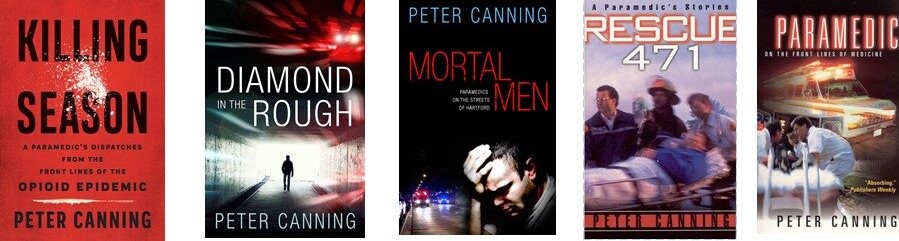
Many years ago when I was a young writer I told another writer I would give anything to have written Ernest Hemingway’s The Sun Also Rises. He scolded me, and said, why would you want to have another person’s story be your mark on the world? Tell your own stories. Write about who you are and how you see the world. Find your own voice.”
Now almost 50 years later, I don’t have the fame of Ernest Hemingway, but I have stories I have written that I can point to and say they show what I feel about the world I have walked through. They speak with my voice.
Today as an EMS coordinator, I read paramedic run reports describing how they encountered sick or injured patients. What were their signs and symptoms? What precipitated their injury or sickness? What kind of medical history do they have? What were their surroundings like? What did the paramedic do for them? How did they respond to the treatment, etc. A well written narrative can be of great help to the doctors in the emergency department in understanding what happened to the patient. It can put them there on the scene and in the back of the ambulance. It can change how they treat the patient in the ED.
Lately, one of the software companies that many of the EMS services use created an AI app to help EMS write their run forms. When I read these AI generated narratives, they may be comprehensive in detail, but they are soulless. Five overdose narratives all read the same as if they were all describing the exact same generic call. They are missing context. They are missing life. And often, if not properly proofread, full of errors. Recently, I read one where an asystolic cardiac arrest had normal heart sounds!
Fortunately some services are policing their providers and making certain that if they use AI, they also provide a human narrative to supplement the mechanical narrative.
If you are going to put your name on a story, an article, a project, a report, a run form, the words should be your own. They should represent what you saw and did, what your thinking was, what you believe. They should speak to the quality of your care and your professionalism as a paramedic.
Put the reader (the ED MD, your QA coordinator, or heaven forbid, the lawyer) there in your place. Help them understand.
AI alone can’t do that.