When I started in EMS in 1989, I worked for a small mom and pop ambulance company in Springfield, Massachusetts called Eastern Ambulance. We provided 911 coverage for the towns of Longmeadow, East Longmeadow, Wilbraham and backup coverage for Springfield, which was covered by a company called BayState which later became Commonwealth, and eventually American Medical Response (AMR), while our little company simply disappeared. We had maybe three ambulances on a good day. One ambulance had holes in the floor board so you could see the road beneath you, brown bondo on the outside to repair the rust holes, and brakes that were hit or miss. I’d bring the ambulance back to the garage saying the brakes were leaving us halfway into an intersection. They put me in another ambulance, but put the next oncoming crew in the same ambulance I had just reported with no repairs done. On Fridays, there was always a race to the bank to cash our checks as sometimes the last ones to reach found their checks bounced. We were told the state had stopped paying for Medicaid patients, and that was killing services running on a tight budget. We had ala carte billing. We were told to put oxygen on all our patients whether they needed it or not because that meant an extra $15 in billing. We did it because we didn’t want the company to go under. EMTs were so scarce back then I got a waiver to work before I had even taken my final state exam. I made $6.00 an hour.
Meanwhile down in Hartford, 27 miles to the south, a man named Harvey Kagan had consolidated local companies into one company called the Professional Group. Kagan was a wily businessman who got into the ambulance business in the 1960’s. He started out taking pictures at accident scenes to sell to newspapers and injury lawyers and then realizing he was often on scene before the ambulances, he decided to buy his own ambulance. When I started working there in 1995, he owned four companies: Professional, L&M, Trinity, and Maple Hill and over thirty ambulances. There was a rotation between ambulance companies that was employed by many of the nursing homes to be equitable to all the companies. They would call Aetna ambulance, a competitor, then Professional and then L&M, then Trinity, Maple Hill and then back to the others. The same person answered each phone call for Pro, L&M, Trinity and Maple Hill, and any of the four ambulances might show up. I worked for L&M and often had a partner wearing a Pro or Maple Hill shirt. If you went to the yellow pages looking for an ambulance, four of the ambulances, all with different phone numbers, were all answered by the same person, all getting one of Harvey’s ambulances. He knew all the tricks. He used to buy steaks for nurse administrators to persuade them to call us. People told me he used to supply homeless alcoholics with liquor so he could send his ambulances around later to pick them up and take them to the hospital. Never witnessed it myself. Others told me, he merely had crews put Professional Group stickers on the liquor bottles with the number to call for an ambulance.
The 1970’s movie Mother Jugs and Speed, starring Bill Cosby and Raquel Welch, about the escapes of a small commercial ambulance company and the people who work there, is supposedly modeled after Hartford in the early days.* As in the movie, company crews would jump their competitor’s calls. First stretcher pulled on scene got the patient. Oh, we were flagged down, the crews would say. There were hijinks as well. It was the wild west.
I worked at the state health department between 1991 and 1994. In Connecticut the state had started setting ambulance rates and services had to come in every year for a hearing to plead their cases. Harvey used to show up in thread bare thrift store suits using a walker to get around, as he pleaded poverty. Yet on weekend nights, he’d wear an expensive suit and take his best producing crews down to the casino at Foxwoods for a meal and a night of gambling. Never in the best health, he had his own dialysis machine in his office. When he wasn’t on it, he was being driven around the city in his Lincoln, checking up the crews to see they were doing their job.
I worked for a volunteer ambulance in East Windsor then. I was an EMT-Intermediate, our service’s highest level of care. If we needed paramedics we had to meet them en route to the hospital. Harvey offered us free paramedic coverage. He was angling to get a district office in Enfield, the town to the north of us, which would increase his transfer business. Helping East Windsor might persuade the state to grant him the office, was his reasoning. I thought it was hard to turn down the paramedic coverage, but the core leaders were so suspicious of his motives, he got turned down, and he never got his Enfield office. About the same time, the federal government raided his offices, and left with boxes of records. They alleged Medicare fraud.
Not long after I started working for L&M as a paramedic in 1995, Harvey Kagan suffered a cardiac arrest in his office and passed away. His family kept the company going for a while, but it eventually was sold, first to Laidlaw, then Medtrans, which bought AMR and then named all its operations AMR. We used to think of AMR as the evil empire, swallowing up everyone around us, and then they got us, too.
Ambulances are much more regulated today than they were back then. You have a mechanical issue, you come right off the road. The equipment is first rate. Many medics can make over $100,000 a year with overtime. Every year we are retrained in anti-fraud laws. They have installed AI driven drive cams in all the ambulances that not only monitor for accidents, but can set off alarms if you take your eyes off the road for too long. The company can’t bribe nurses any more. Most services are either run by national corporations or increasingly by large hospital medical networks.
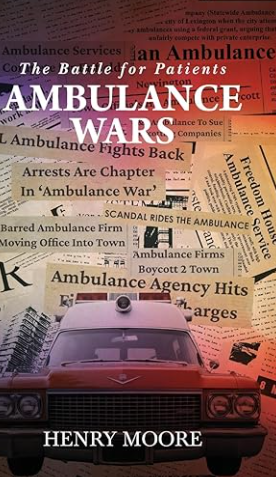
There’s a new book out, called Ambulance Wars: The Battle for Patients, written by Henry Moore who worked for Harvey for a time starting in the late 70’s and later ran his own mom and pop ambulance called Superior that was eventually bought out by AMR. The book is 400 pages, and while a magazine article might have covered the interesting material for the average reader, it is quite a historical document for someone wanting to get deeply into it. It doesn’t just cover the Hartford ambulance wars of the 70’s and 80’s,but goes back to the 1800s to talk about emergency medical coverage in the city, back when horses pulled the wagons. While I found myself skimming through many of the chapters, it was still enlightening. I was hoping there would be more about the period where I knew Kagan, but it largely ends before then.
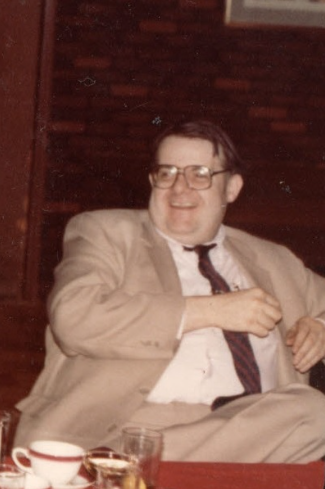
A lot of people didn’t like Harvey Kagan, but I did. He was a character. Big giant man with a deep gravely voice. He cared about money, but he also cared about his crews. Every winter he put on a huge Christmas party for his employees at a banquet facility — top rate food, open bar, expensive door prizes. Nowadays we get a Christmas card. And there were stories, a medic had a sick kid or wife with cancer or needed to fly across the country for a parent’s funeral, Harvey was always there to help. He was old school. Everyone loved him except for those who hated him.
For years after his death, medics swore they still heard his voice on the radio or saw his Lincoln cruising the city streets at night.
*After writing this I spoke with an old company EMT who told me she actually called the screenwriter many years ago investigating this rumor, and he denied any link to Hartford or any other market. She said she spoke to him for nearly two hours and he was fascinated to hear how closely the movie actually reflected real life.