
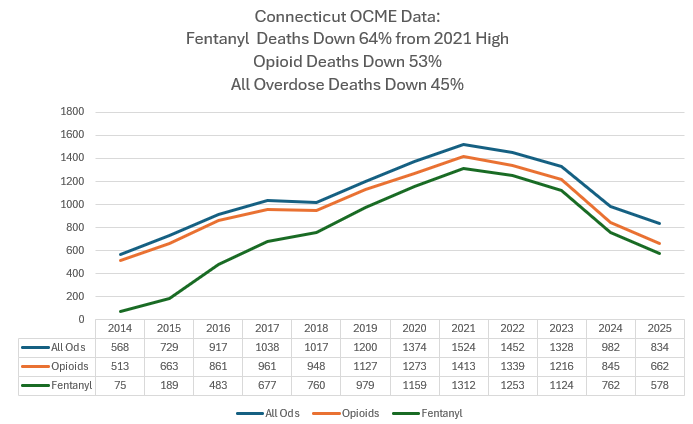
No. It’s not. But we are making progress, no doubt. Here in Connecticut, we peaked in 2021 with 1524 overdose deaths, 93% of them opioid and 86 % fentanyl. Since then, overdose deaths are down 45%; opioid deaths are down 53% and fentanyl deaths are down a whopping 64%. We are at levels not seen since 2016 and early indications are the 2026 number will continue the decline.
Great news, yes, but we must remember the epidemic did not begin in 2016. But then it was already raging. It started in the 1990s and grew steadily overtime. The age adjusted drug poisoning death rate (per 100,000 people) in the US was 6.1 in 1999, it was 11.9 in 2008, 19.8 in 2016 and reached a peak of 31.3 in 2023. It was down to 20.5 in 2025.
Remember there have been three waves of this epidemic.
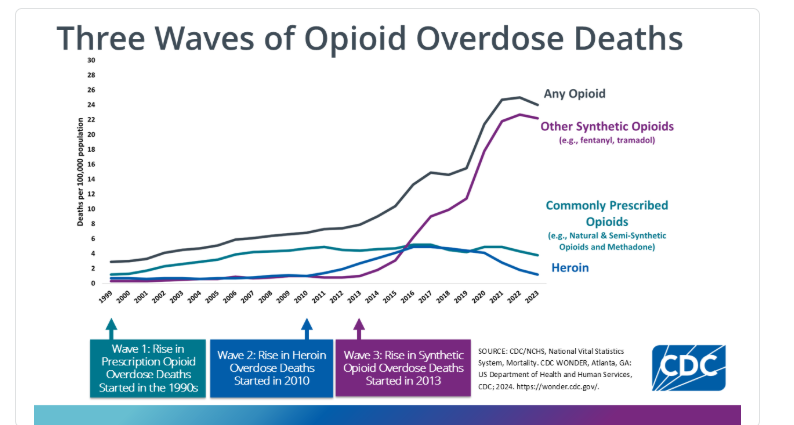
The first wave of the epidemic began in 1996 with the aggressive marketing of the prescription opioid painkiller OxyContin. The second wave began in 2010 when users switched to heroin after an abuse-resistant formula of OxyContin was introduced. The reformulated pills made it harder for users to crush the pills into usable powder. Heroin was cheaper, stronger, and more readily available. It has been estimated that 80 percent of people addicted to heroin first misused prescription drugs. The death rate skyrocketed. The third and deadliest wave of the opioid epidemic began in 2013 when the heroin supply was increasingly adulterated with illegally produced fentanyl. Fentanyl, a synthetic opioid manufactured in laboratories, is 50 times stronger than heroin by weight. The key factor in increasing deaths is that fentanyl, because it is so much more potent than heroin by weight, is difficult for dealers to evenly distribute when mixing their batches with adulterants and filling small packages meant for street sale, or in pressing the powder into pill form. If poorly mixed, a single small package or pill can cause death.
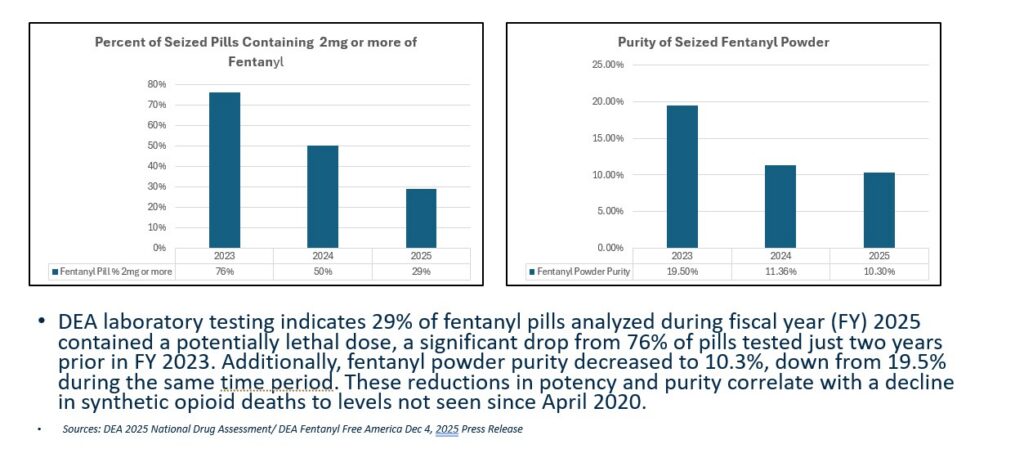
The third wave has almost receded. While fentanyl continues to be the 800 pound gorilla in this epidemic (accounting for 87% of opioid deaths in Connecticut in 2025), it has been weakened by decreasing purity and the ubiquitous presence of naloxone. The DEA reports nationwide fentanyl purity both in powders and counterfeit pills has been down significantly since 2023, when national deaths reached their peak.
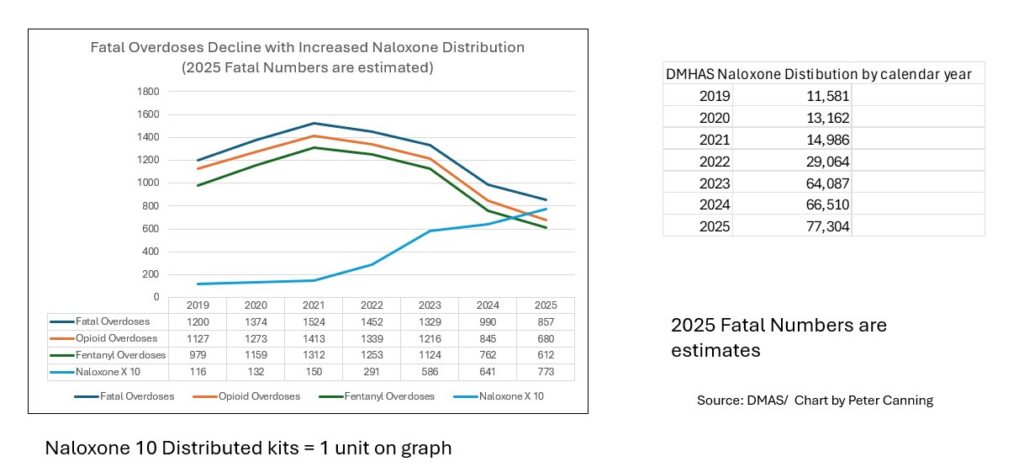
Connecticut deaths reached their peak in 2021 at about the same time dealers started adding xylazine to the mix and decreasing the percentage of fentanyl, a trend that gained momentum in other states as the years have passed. Naloxone distribution in the meantime ramped up 700% between 2019 and 2025.
So celebrate the progress made, but we must continue the work. Every opioid overdose is preventable. We have to continue to educate, provide naloxone, access to treatment, and fight against stigma.
Fentanyl purity likely decreased to three factors 1) the cartels’ difficulty getting precursor chemicals, 2) the cost savings of using animal tranquilizers, and 3) maybe the desire not to not kill so many people to help keep the heat off.
We must be vigilant to the ever-changing drug supply and hope no more potent drugs gain a foothold or that fentanyl purity levels start to rise again.
Someday this war will be over.
Carry on.