
The opioid overdose epidemic continues to be serious problem despite recent significant declines in deaths, and the press, as is its way, is still sensationalizing the crisis
Weapons-Grade Chemical Carfentanil Surges as Dangerous Substitute for Fentanyl declares the headline of a recent Associated Press story.
Biological weapon, resistant to naloxone, surges!
Let’s cut through the hysteria.
Carfentanil is 100 times stronger than fentanyl by weight, but that does not mean a counterfeit pill containing carfentanil is 100 times stronger than a counterfeit pill containing fentanyl. It merely means less carfentanil has to be added to the batches than fentanyl, just like less fentanyl has to be added than heroin was back when heroin was the main active ingredient. The problem is the stronger the active ingredient the more difficult it is to ensure a consistent dose in each pill or wax fold. Blending evenly is difficult for dealers if not impossible outside of a pharmaceutical lab.
While there was a rash of deaths and overdoses when carfentanil first hit the scene in 2017 in states like Ohio and Pennsylvania, carfentanil deaths declined markedly as dealers recognized the difficulty of mixing the drug without killing too many people. While it is true carfentanil is making a reappearance-and this should be taken seriously, it has not been linked to the large overdose outbreaks as it was in 2017 and represents only a tiny portion of overdoses deaths. Carfentanil was only present in 3% of deaths in Connecticut this past year and when it is discovered, it is most often only in trace amounts and usually co-present with fentanyl. You would expect there to be a rash of nonfatal overdoses surrounding these carfentanil-involved fatal cases, but that has not happened.
Carfentanil also responds to naloxone. Most of the studies that suggest that synthetic opioids like fentanyl and carfentanil require many doses of naloxone are funded by the pharmaceutical companies pushing their new high dose products. Real world data from harm reduction centers and Emergency Medical Services show that standard dosing has been sufficient.
Nationwide overdose deaths are in steep decline, down almost 40% from their June 2023 rolling 12-month high, according to CDC data. This has been attributed to many factors, including widespread distribution of naloxone and declining fentanyl purity.
We should remain vigilant to the ever-changing drug supply, and the possibility of carfentanil making a serious reemergence, but let’s keep the hysteria to a minimum.
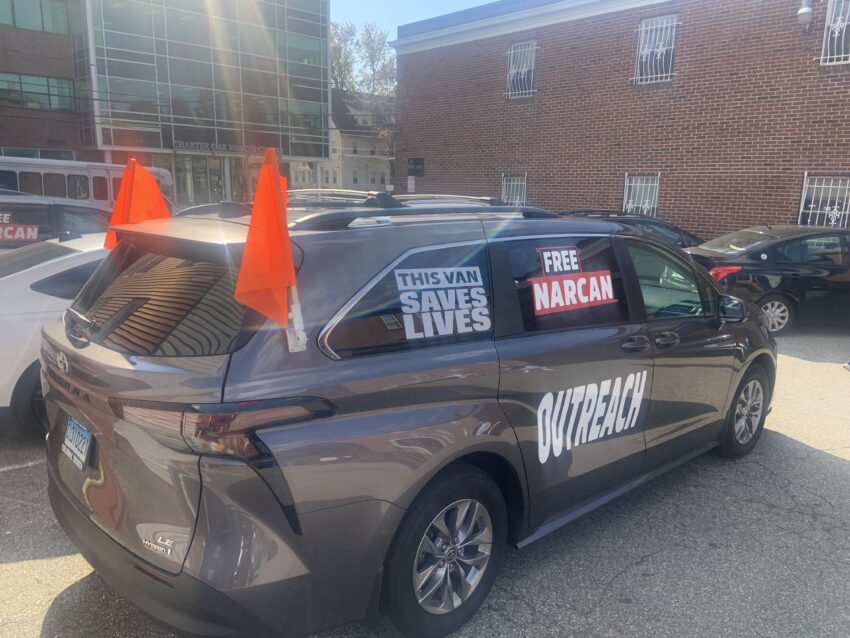
Remind users that the illicit supply is volatile. Tell them to have naloxone present at all times and to never use alone. We must continue to fund harm reduction and improved access to medications for opioid use disorder (MOUD).
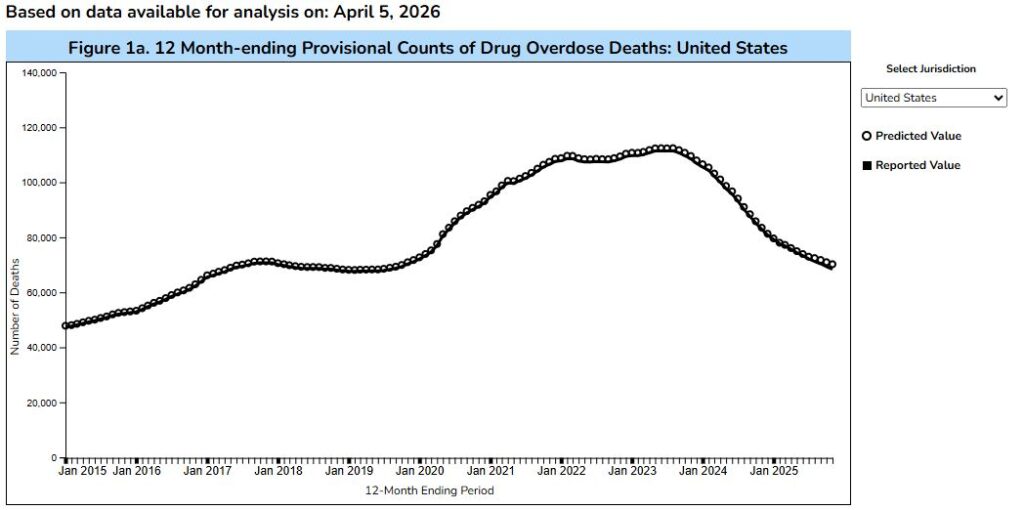
CDC Data